
Are you wondering how to make your business grow in 2025? The secret is having a smart digital marketing strategy. With so many new trends and online tools, it’s easy to feel lost or unsure about where to start. Don’t worry! This guide will help you understand what a digital marketing strategy is, why it matters for your business, and how you can build one step by step—even if you’re brand new to marketing. Let’s learn together how to reach more customers and make your brand shine online.
The world of digital marketing keeps changing, and that means businesses need to keep up. New tools, trends, and customer habits pop up every year. If you stick to old ways, you might get left behind by your competitors. A strong digital marketing strategy helps you stay ahead, reach more people, and grow your business even when the online landscape changes. With simple steps and smart choices, anyone can create a plan that brings better results—no fancy skills needed!
Why Your Business Needs a Digital Marketing Strategy in 2025
In today’s world, almost everyone uses the internet to find products and services. If your business doesn’t show up online, you could be missing out on many potential customers. Having a clear digital marketing strategy helps you get noticed by the right people at the right time. It helps you spend your money wisely, so you don’t waste it on ads or activities that don’t work. Most importantly, it helps build trust with your audience by giving them the information and experience they want. In 2025, a smart digital marketing plan isn’t just an option—it’s a must-have for any business that wants to succeed.
Key Parts of a Digital Marketing Strategy in 2025
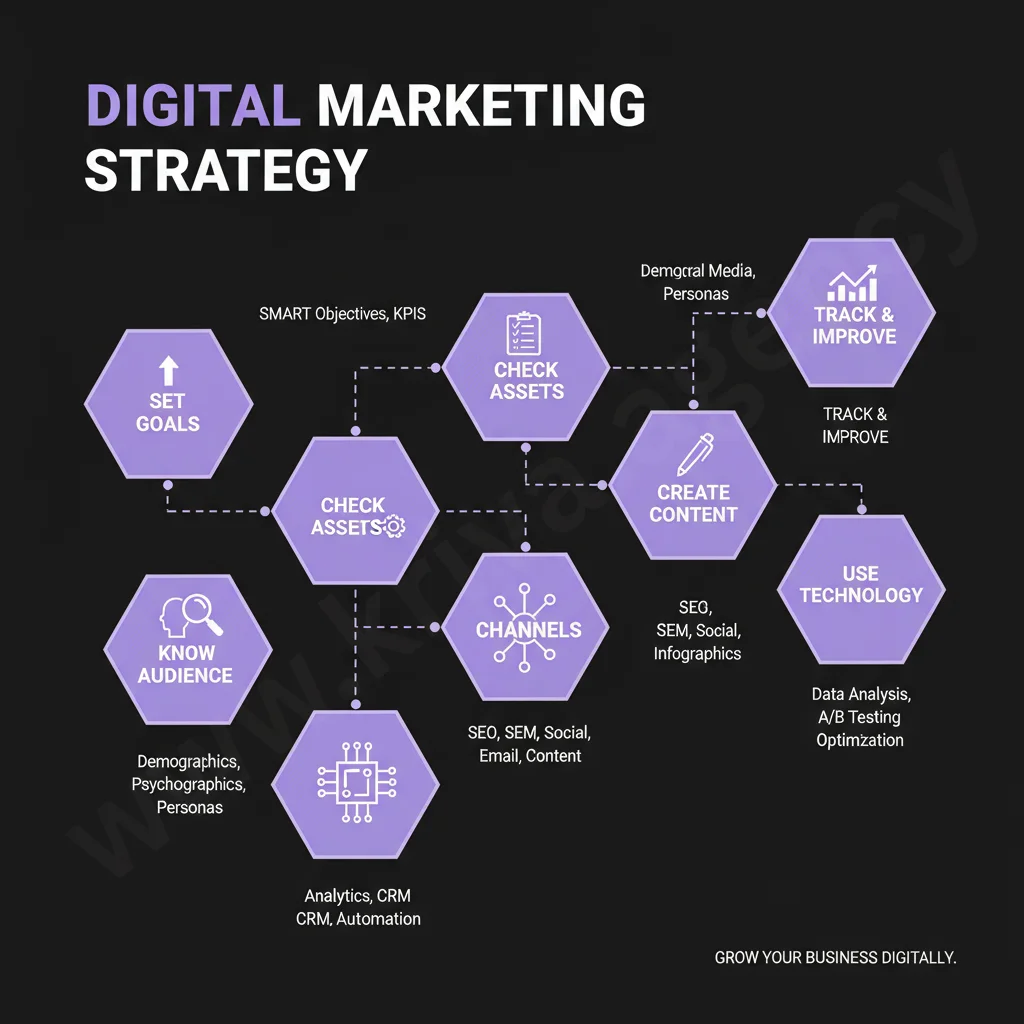
Building a strong digital marketing plan means including several important parts. Here are the main pieces you need to focus on:
- Set Clear Goals
Start by deciding what you want your marketing to achieve. Your goals should be clear and realistic, like getting more visitors to your website, gaining new customers, or increasing sales. Use the SMART method to make sure your goals are Specific, Measurable, Achievable, Relevant, and Time-bound. - Know Your Audience
Understand who your customers are. Learn about their age, location, interests, and problems they want to solve. Knowing your audience helps you create messages and ads they will listen to and like. - Check Your Current Assets
Look at your existing website, social media, and other marketing tools. Find out what’s working and what needs improvement. This will help you know where to focus your efforts. - Choose the Right Channels
Pick the best places to share your message. This could be search engines like Google, social media platforms, email, or paid ads. Use the channels that your audience uses the most. - Create Great Content
Make helpful and interesting content that answers your customers’ questions and solves their problems. Content can be blog posts, videos, social media posts, or emails. - Use Technology Smartly
Use tools like AI, marketing automation, and data analytics to make your marketing smarter. These tools can help you reach the right people with the right message at the right time. - Track and Improve
Keep an eye on your marketing results. Use analytics to see what’s working and what’s not. Then make changes to improve your results over time.
How to Put Your Digital Marketing Strategy Into Action
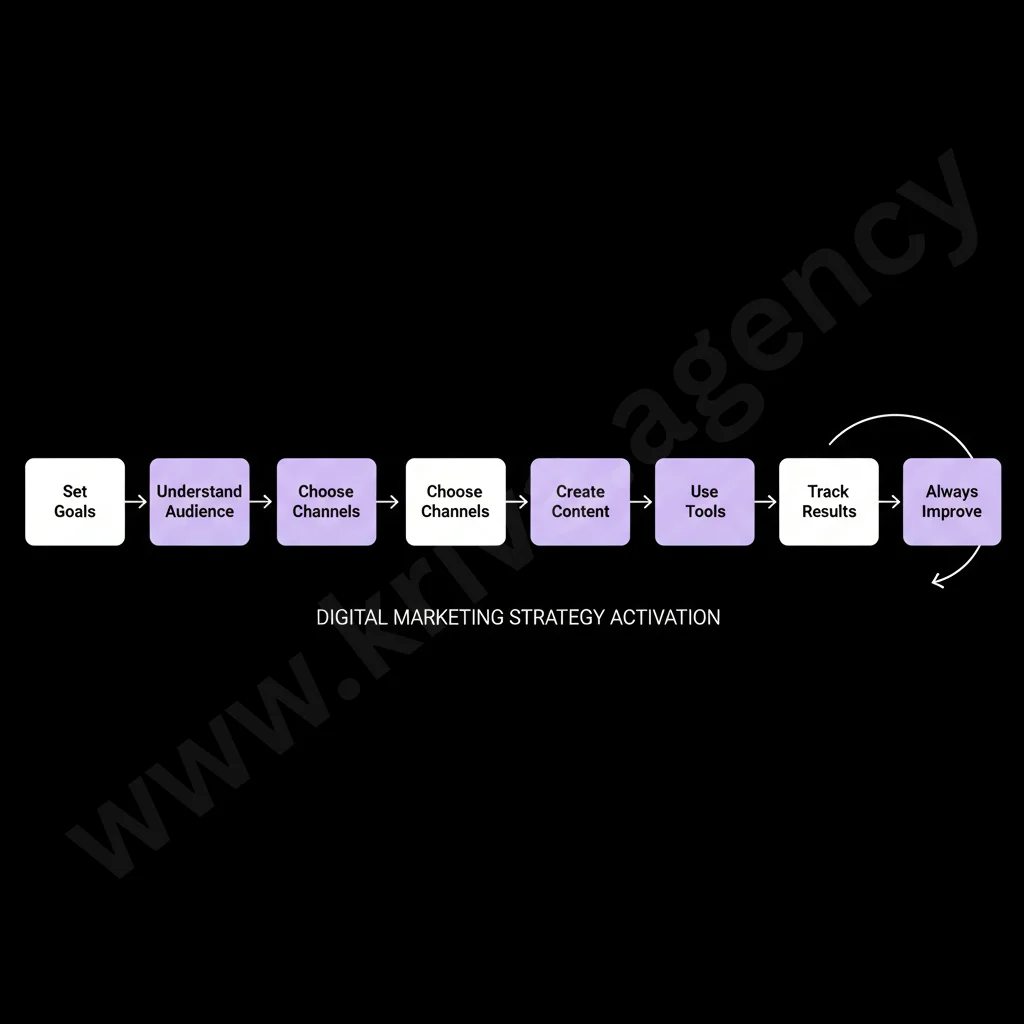
Creating a plan is just the start — the real success comes when you put your strategy into action. Here’s a simple step-by-step guide to help you execute your digital marketing plan effectively:
- Set Clear Goals
Know what you want to achieve. For example, getting more website visitors or increasing sales by a certain amount. Make sure your goals are specific and measurable so you can track progress. - Understand Your Audience
Keep your customers in mind. Know where they spend time online, what they like, and what problems they need solved. This helps you create messages that speak directly to them. - Choose Your Marketing Channels
Decide which online platforms to use — like Google, Facebook, Instagram, email, or your website. Focus on the channels where your audience is most active. - Create Good Content
Make helpful, fun, or interesting content. This could be blog posts, videos, social media updates, or emails — anything that adds value for your customers. - Use Tools to Work Smarter
Use tools like scheduling software, email automation, or paid ads to save time and reach more people. Don’t try to do everything manually. - Track Your Results
Keep an eye on how your strategy is working. Use tools like Google Analytics to see visitors, clicks, and sales. This helps you know what’s working and what needs fixing. - Always Improve
Make changes based on what you learn. If something isn’t working, try something new. Keep testing and improving your strategy regularly.
Step-by-Step Guide to Building Your Digital Marketing Strategy
Step 1: Understand Your Current Position
Start by looking at your business’s current place in the market. What digital channels do you already use? How well is your website performing? What about social media pages and ads? Knowing this helps you spot what’s working and what needs fixing.
Step 2: Set SMART Goals
Set clear goals for your marketing. Use the SMART criteria — make sure your goals are Specific, Measurable, Achievable, Relevant, and Time-bound. For example, instead of saying “I want more sales,” say “I want to increase sales by 20% in the next 6 months.”
Step 3: Know Your Audience
Create detailed profiles of your ideal customers. Understand their age, location, interests, and online behaviors. This helps you tailor your messages and choose the right online channels.
Step 4: Analyze Your Competitors
Check what your competitors are doing online. Look at their content, social media, and ads to see what’s working for them. You can learn from their successes and find gaps to improve on.
Step 5: Plan Your Content Strategy
Decide what kind of content you will create — blog posts, videos, infographics, or social media updates. Your content should answer your customers’ questions and solve their problems.
Step 6: Choose Your Marketing Channels
Pick the right places to share your content and ads. This could be Google Search, Facebook, Instagram, email newsletters, or other platforms where your audience spends time.
Step 7: Launch Campaigns and Measure Performance
Start your marketing campaigns and use tools like Google Analytics to track how well they’re doing. Watch metrics such as website visits, social media engagement, and sales. Use these insights to improve your strategy regularly.
Launching and Managing Your Digital Marketing Campaigns
Once you have a solid plan, it’s time to bring it to life with real campaigns. Follow these steps to make sure your marketing efforts hit the mark:
- Create Targeted Campaigns: Use the profiles of your audience to craft ads, posts, and emails that speak directly to their needs and interests.
- Use the Right Platforms: Focus on channels where your audience spends the most time, whether that’s Google, Facebook, Instagram, LinkedIn, or email marketing.
- Schedule and Automate: Use marketing automation tools to schedule posts and emails ahead of time. This saves you effort and keeps your brand active even when you’re busy with other tasks.
- Track Your Progress: Set up tools like Google Analytics and social media insights to monitor how well your campaigns are doing. Keep an eye on visits, clicks, shares, and conversions.
- Adjust as You Go: Marketing is a continuous process. Use the data you collect to tweak your campaigns, improve messaging, and allocate budget to the best-performing channels.
Effective campaign management helps maximize your return on investment and grows your brand steadily over time.
Planning Your Budget and Timeline
A good digital marketing strategy isn’t just about what you do—it’s also about how much you spend and when you do it. Planning your budget helps you decide how much money to allocate across different marketing channels like social media ads, SEO, email marketing, and content creation.
- Set a Realistic Budget: Decide on an amount that fits your business size and goals. You don’t need to spend a fortune—start modest and scale up as you see results.
- Divide Your Budget Wisely: Allocate your budget based on what channels perform best with your audience. For example, more on Facebook ads if your audience is there, or more on SEO if organic search drives your traffic.
- Create a Marketing Calendar: Schedule campaigns and content in advance. This keeps your efforts steady and aligned with important dates like product launches, holidays, or sales periods.
- Review Regularly: Don’t set and forget. Track how your budget is performing and adjust allocations monthly or quarterly to get the best return on investment.
Measuring Success: Key Metrics to Track Your Digital Marketing Strategy
Tracking your progress is one of the most important parts of any digital marketing plan. Without knowing what’s working, it’s hard to make smart decisions or improve results. Here are some simple but powerful metrics you should watch:
- Website Traffic: How many people visit your site? More visitors usually mean your marketing is working well.
- Bounce Rate: This shows how many visitors leave your site after viewing just one page. A lower bounce rate means people find your site interesting.
- Conversion Rate: This is the percentage of visitors who take an action — like filling out a form, signing up for your newsletter, or making a purchase. Higher conversion means your marketing is convincing.
- Customer Acquisition Cost (CAC): This tells you how much you spend to get one new customer. Keeping this low means your marketing is cost-effective.
- Return on Ad Spend (ROAS): How much revenue you earn for every dollar you spend on advertising. The higher, the better.
- Engagement on Social Media: Likes, comments, shares, and follower growth show how well your brand connects with people online.
- Email Open and Click Rates: These metrics help you understand how interesting and relevant your email campaigns are.
Regularly checking these numbers helps you spot what’s working and what needs fixing. Using simple tools like Google Analytics and social media insights can make this easier.
Frequently Asked Questions (FAQ) About Building a Digital Marketing Strategy in 2025
Q1: What exactly is a digital marketing strategy?
A digital marketing strategy is a detailed plan that helps your business grow online. It shows how you will use websites, social media, email, ads, and other digital tools to reach more customers and achieve your business goals.
Q2: How long does it take to build a digital marketing strategy?
Building a strategy can take a few days to several weeks depending on your business size and goals. It requires research, setting goals, planning content, and choosing marketing channels before launching campaigns.
Q3: Do small businesses need a digital marketing strategy?
Yes! Whether you’re a big company or a small local business, having a digital marketing plan helps you use your time and money wisely to attract more customers online.
Q4: Can I create a digital marketing strategy on my own?
Absolutely! You can start by following simple steps like defining your goals, understanding your audience, and planning your content. However, many businesses also hire experts to get faster and better results.
Q5: How often should I review and update my digital marketing strategy?
Marketing trends and customer behaviors change often. It’s best to review your strategy every 3 to 6 months to make improvements based on results and new opportunities.
Conclusion: Take Charge of Your Digital Marketing Success in 2025
Building an effective digital marketing strategy is key to growing your business in 2025 and beyond. By setting clear goals, knowing your audience, choosing the right channels, and continuously measuring and improving your efforts, you can reach more customers and stand out from the crowd.
Remember, success doesn’t happen overnight—it takes planning, patience, and action. Start small, keep learning, and refine your strategy as you go.
If you’re ready to build a winning digital marketing strategy but need expert guidance, Kriva is here to help. Contact us today to learn how we can support your brand’s growth with smart, data-driven marketing solutions.